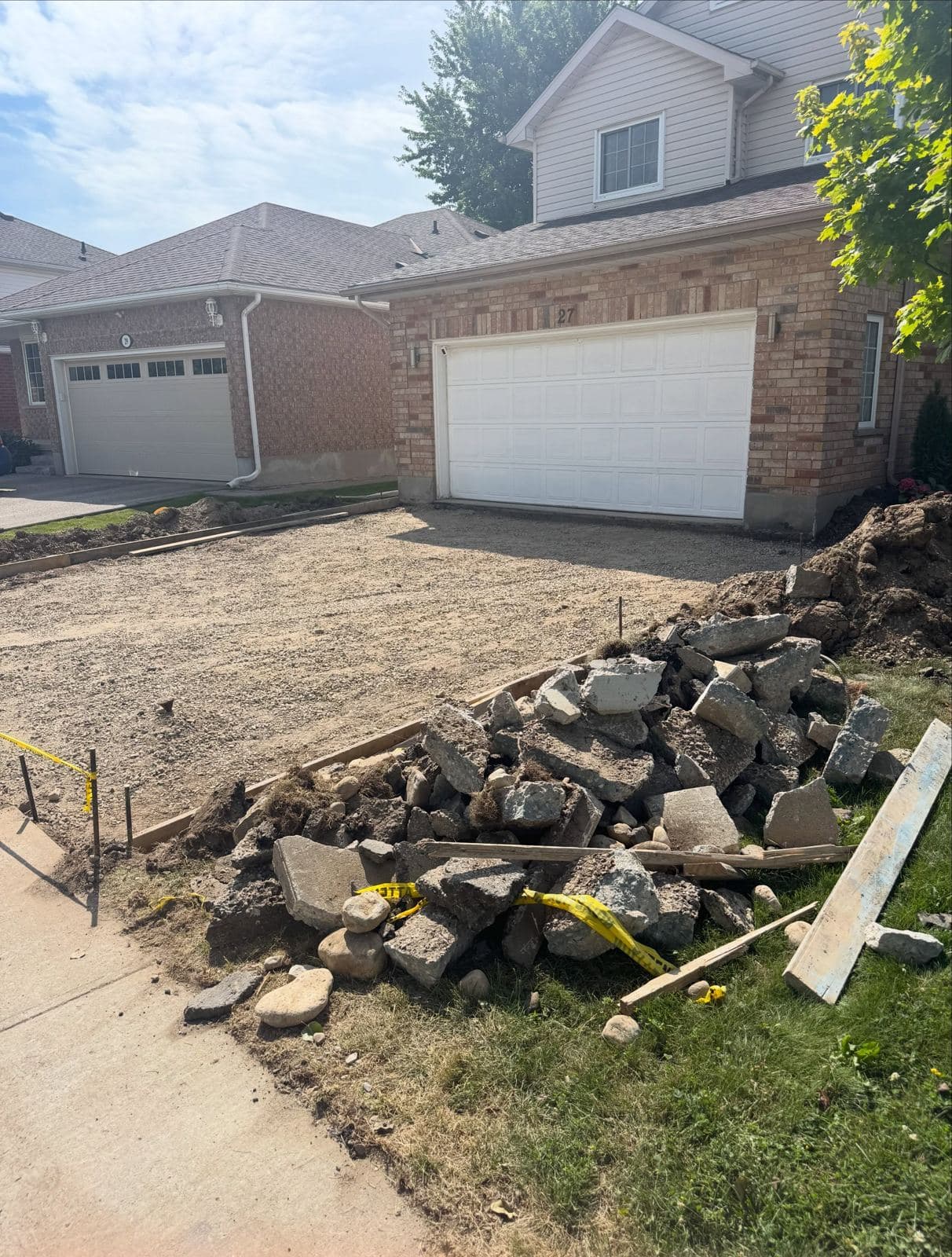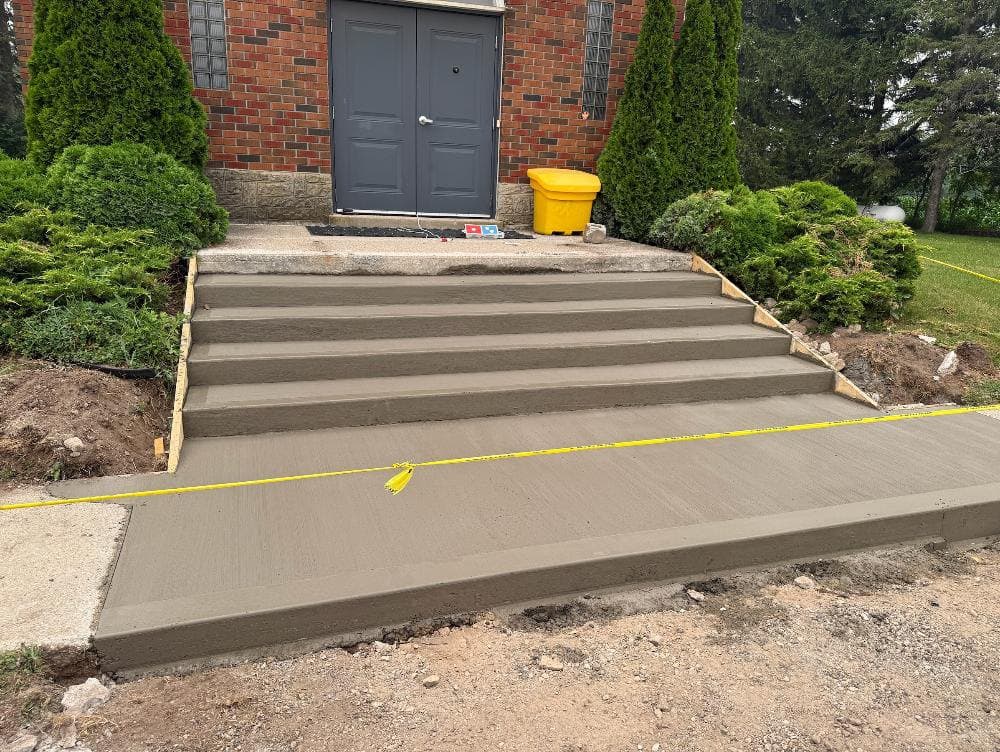
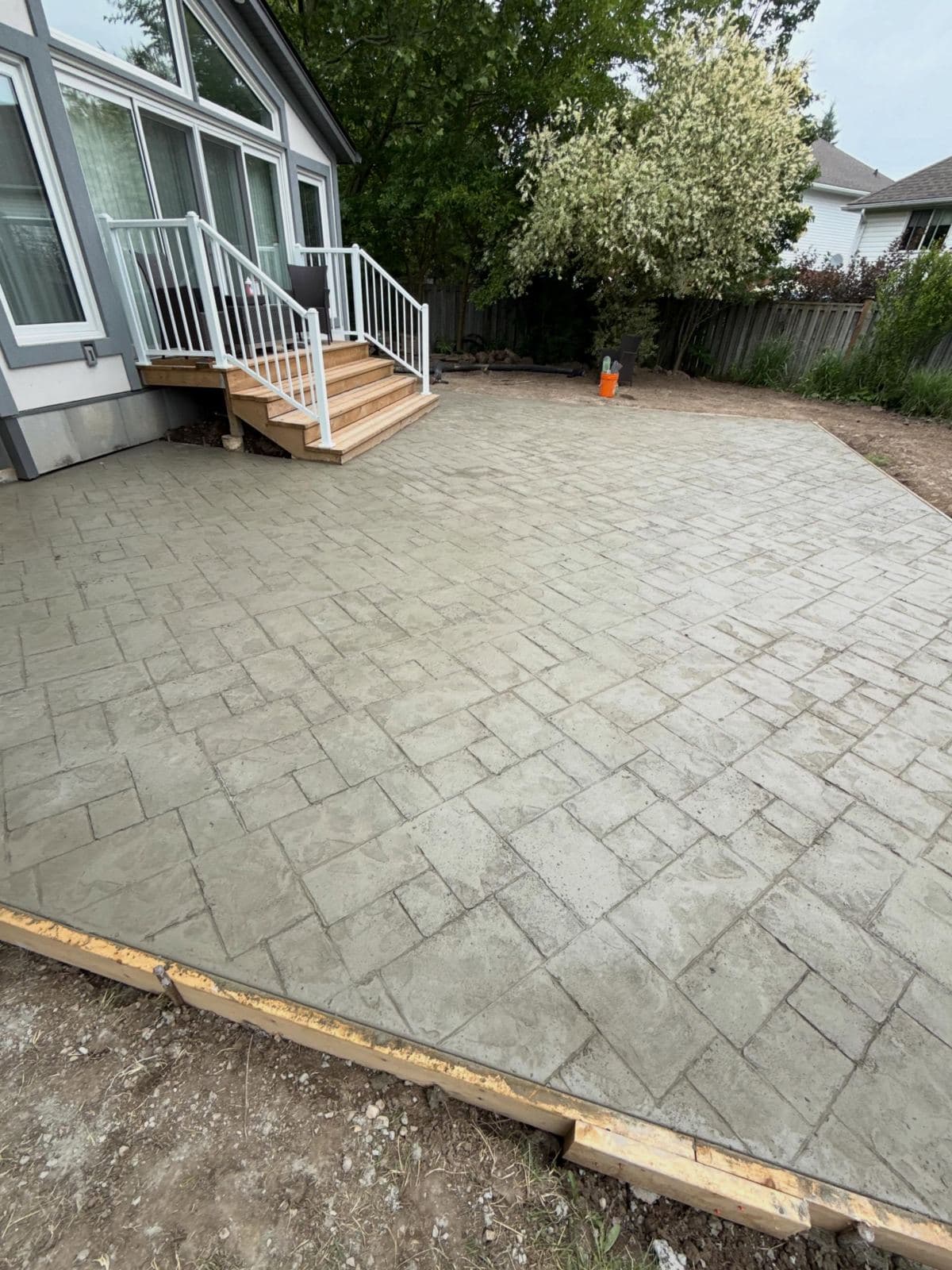
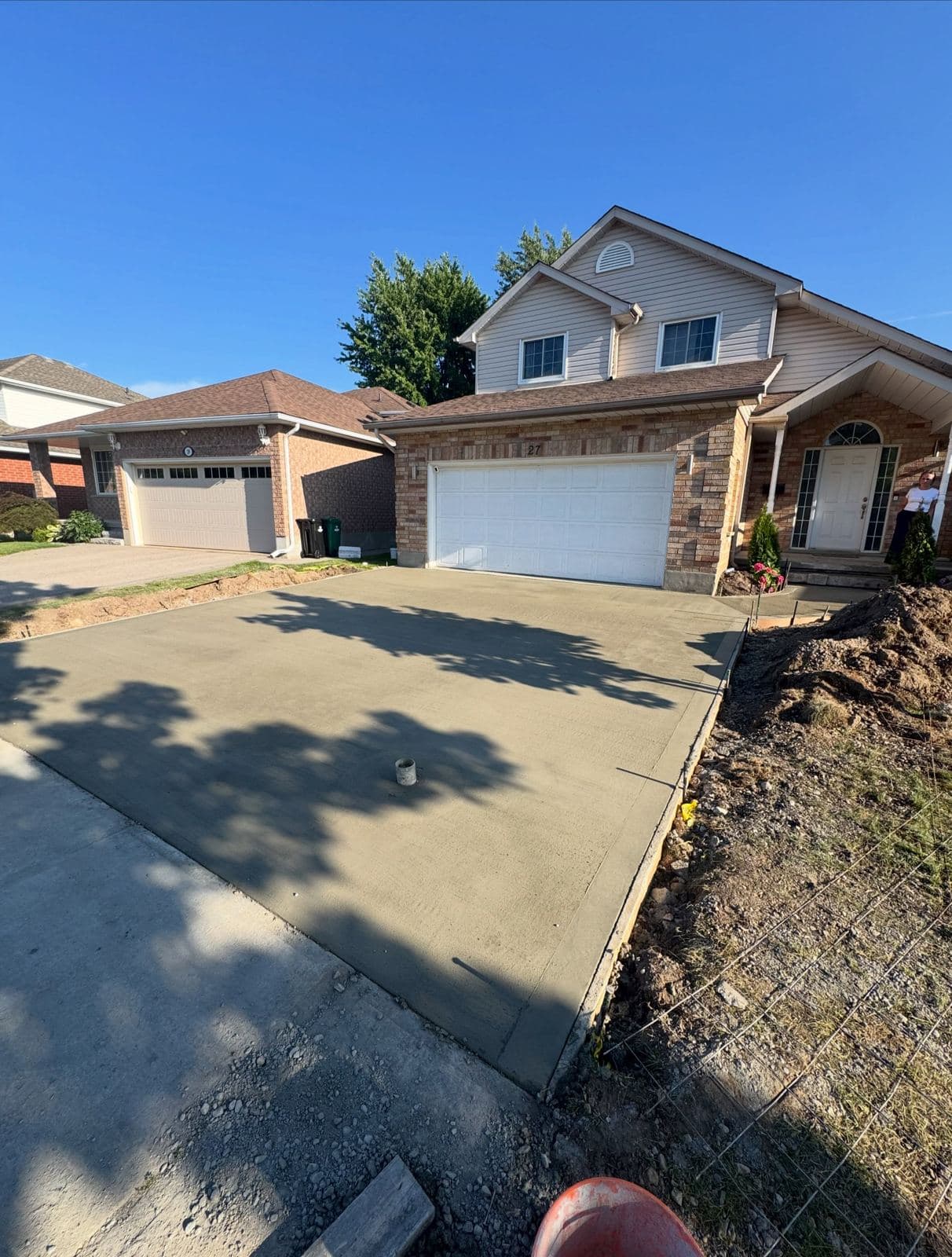

Gregg Court
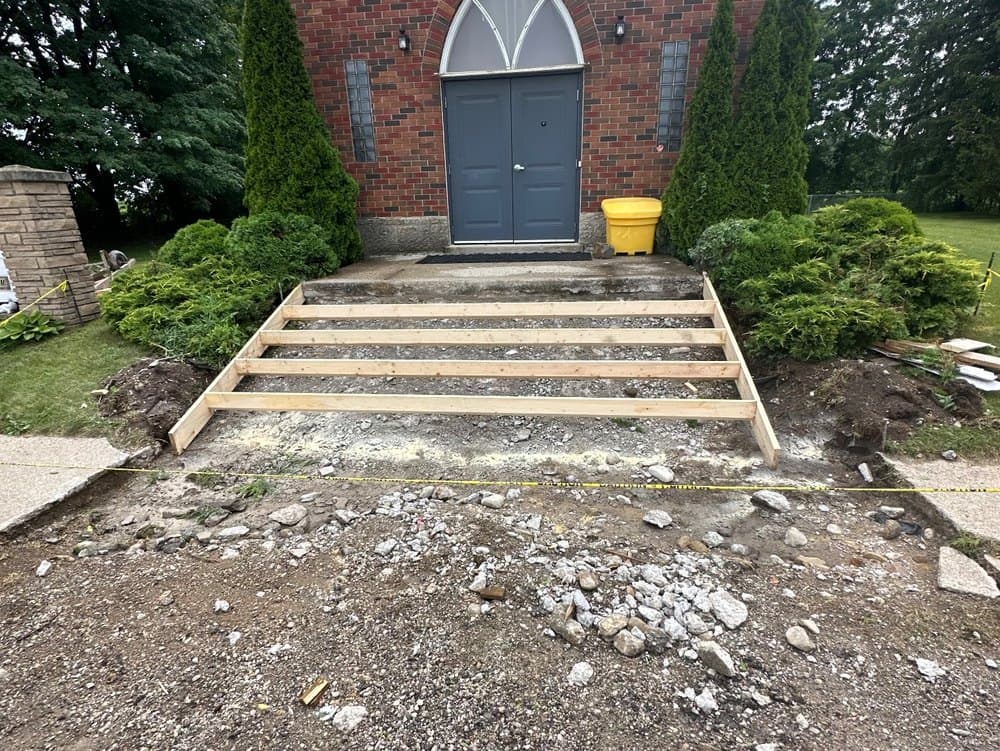
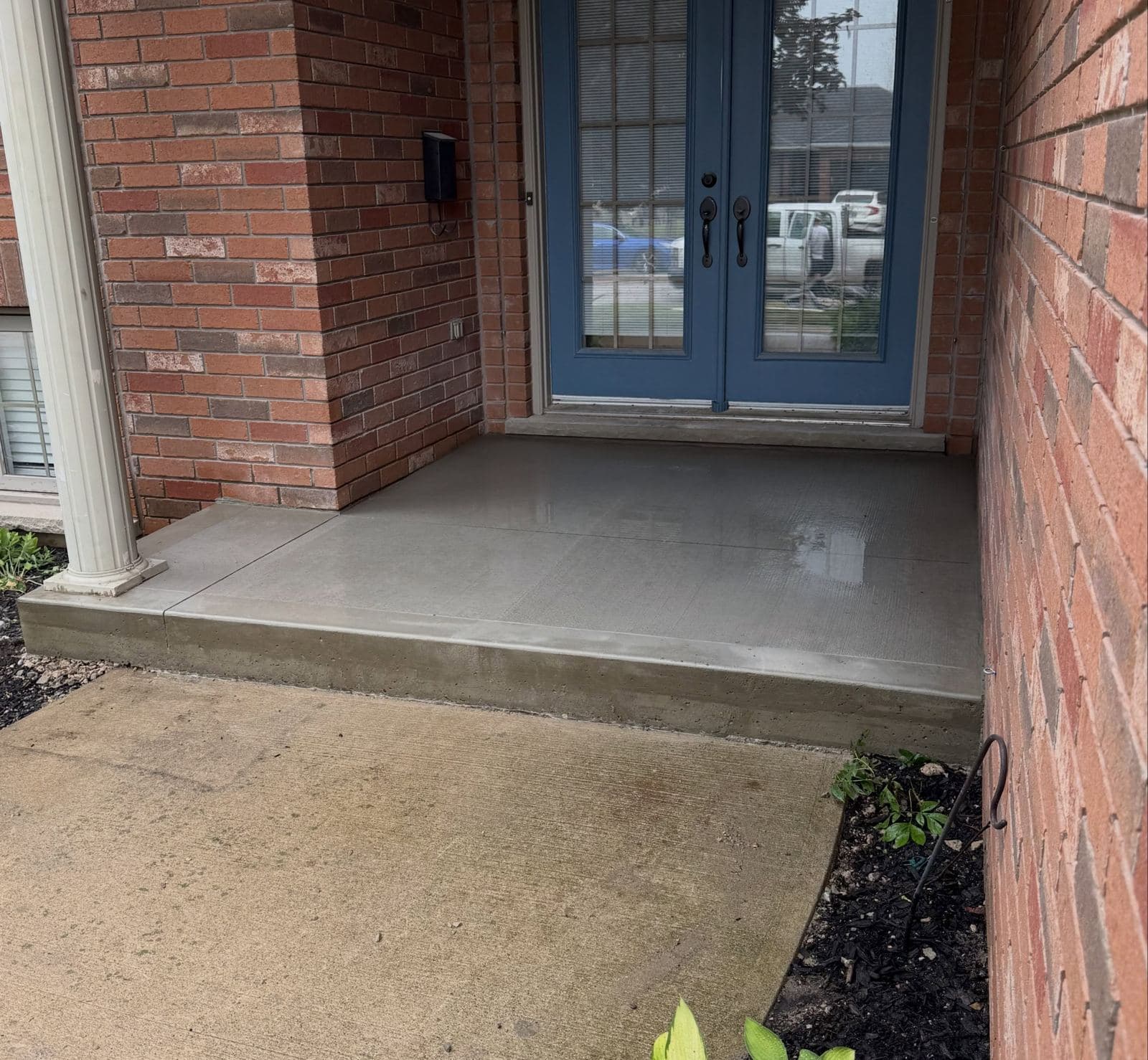
- Scope.
- Old concrete broken out and hauled, base rebuilt, new front porch and a full width driveway.
- Result.
- Formed, poured and broom finished by our own crew. A complete front entrance transformation.
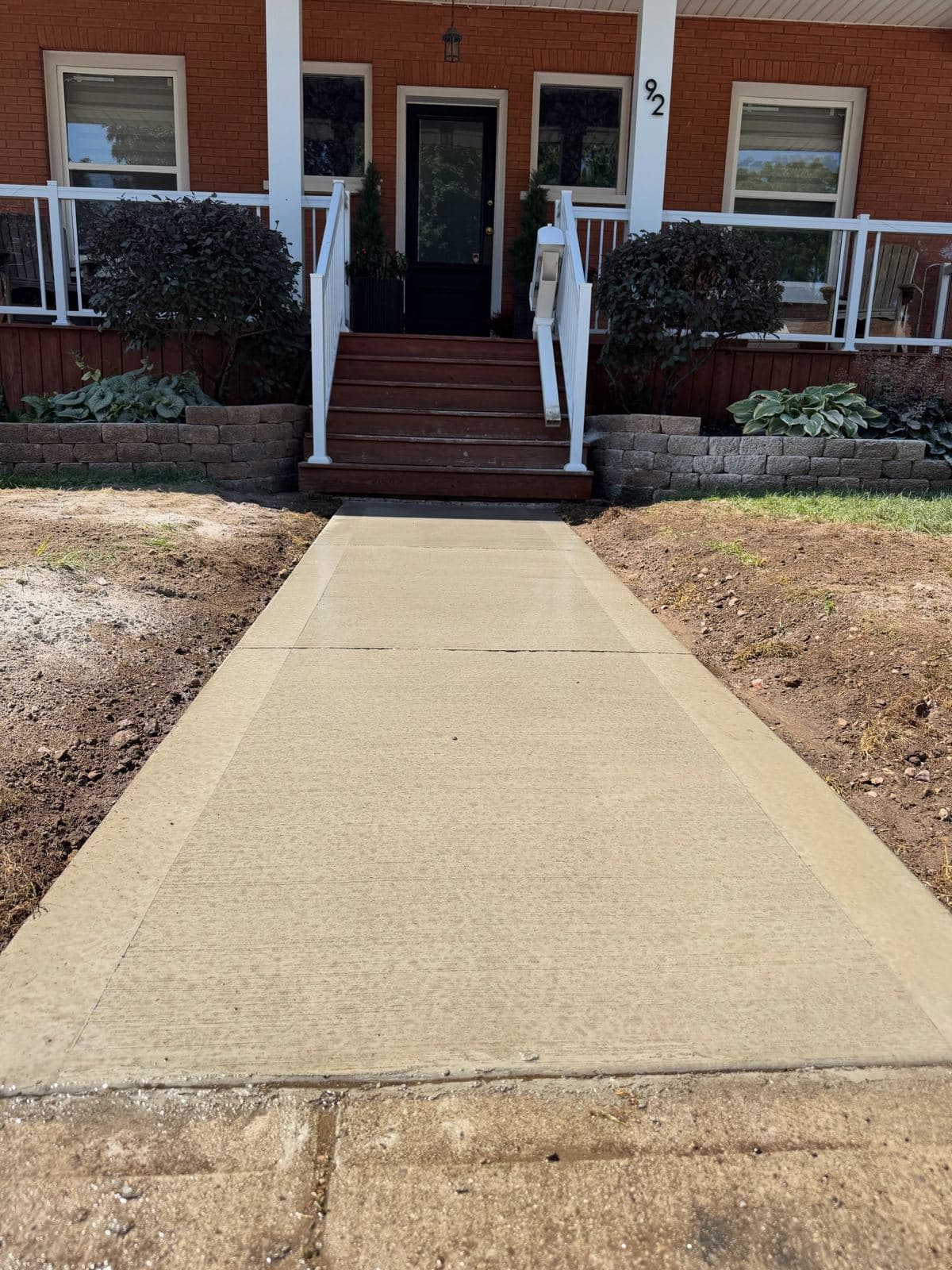
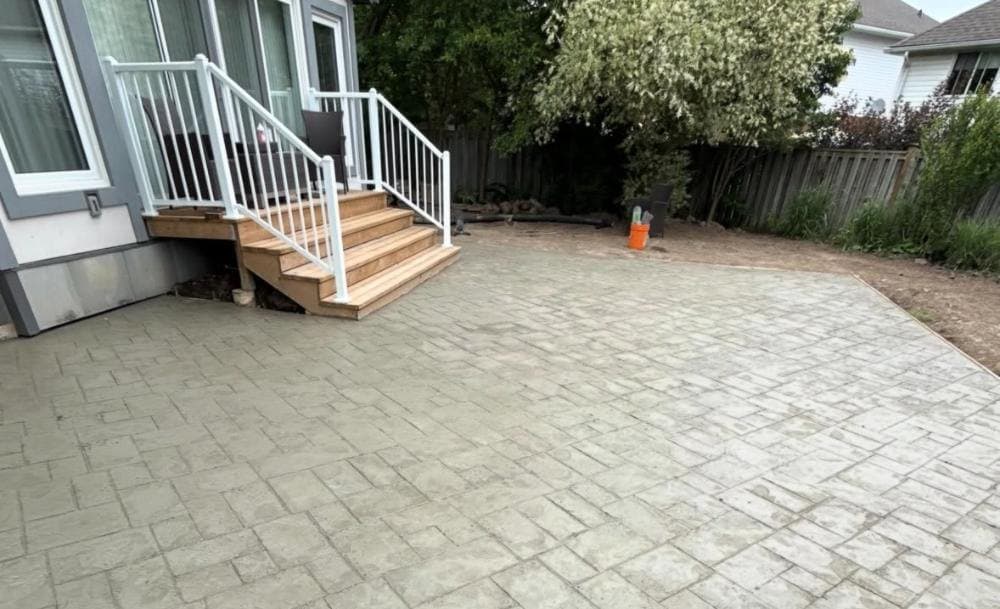
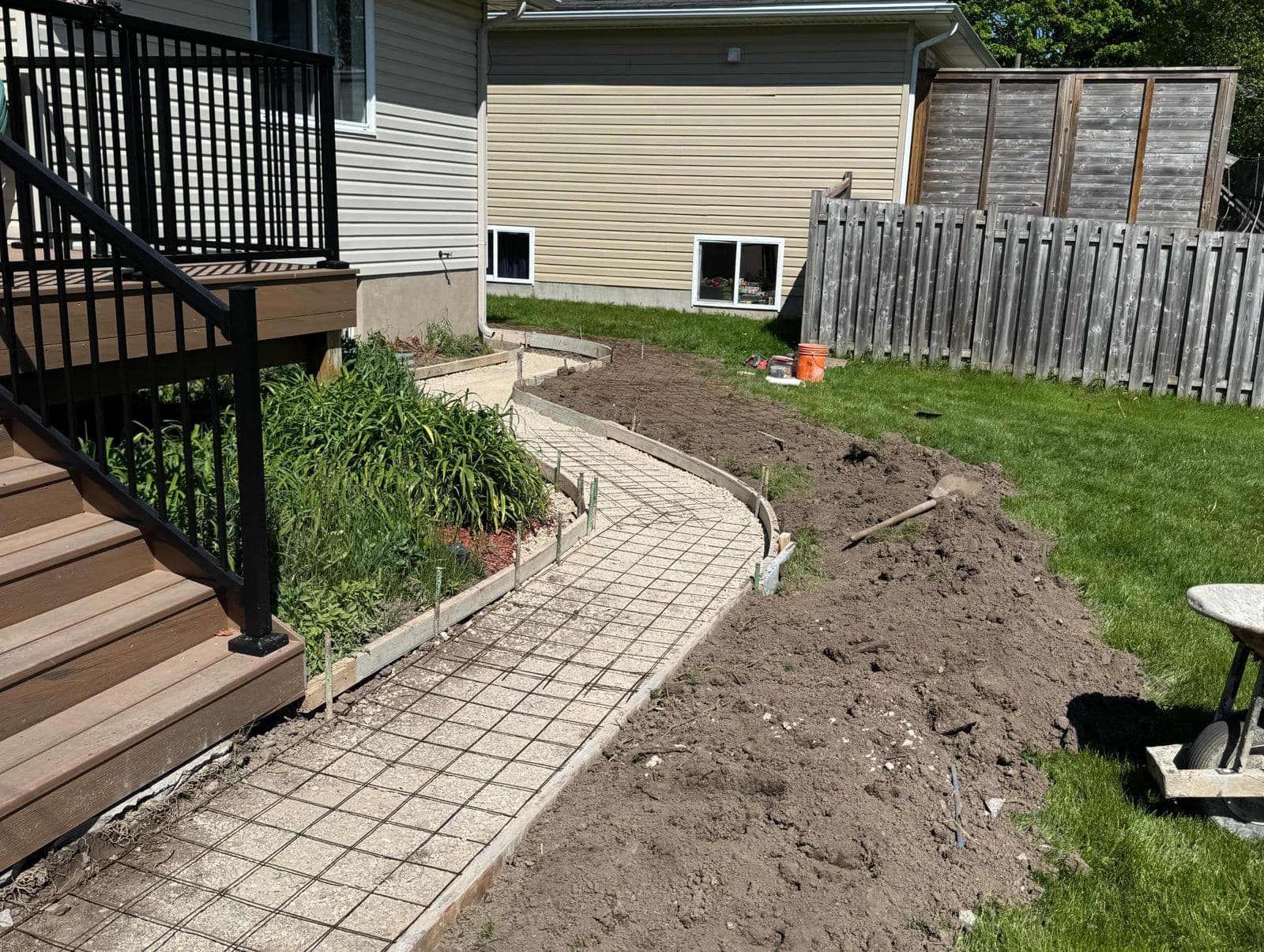
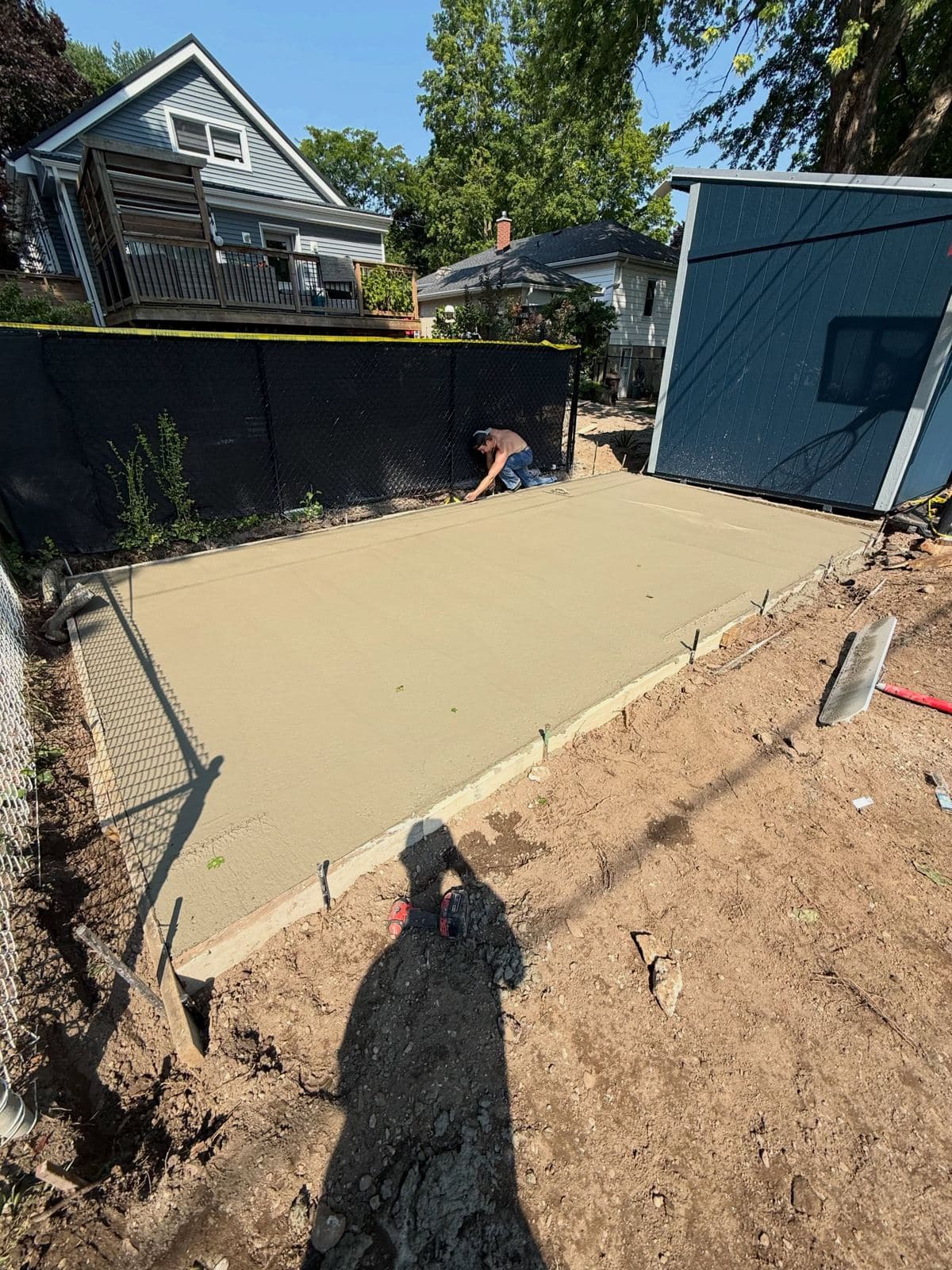
One continuous slab, formed to the shape of the yard, with the pattern pressed into it while it is still green.
A stamped patio is a poured concrete slab with a pattern and colour worked into the surface before it sets. It is not a coating and it is not a veneer, which is why it does not peel: the texture and the colour are part of the slab.
It is also a one shot process. The window between the concrete being firm enough to hold a stamp and too firm to take one is short, and it moves with the weather. That is the part that separates crews, and it is the reason we do not sub out finishing.
Pavers and flagstone are individual units sitting on a bedding layer. Every one of them can settle independently, every joint is somewhere sand washes out of and weeds grow into, and the whole field wants re-levelling on a cycle.
A stamped patio is a single engineered slab with reinforcement through it. Nothing shifts relative to anything else because it is all one piece. You give up the ability to lift one unit and replace it, which is a genuine trade-off and we will say so, but for most back yards the maintenance difference over twenty years is not close.
Ashlar slate, seamless stone, cobble, wood plank and herringbone are the patterns we pour most. Colour comes from an integral pigment in the mix plus a release colour worked into the surface, which is what gives it depth rather than a flat painted look.
The thing people regret is going too bold. A pattern and colour that look striking on a two foot sample can be a lot across four hundred square feet against your actual house. We bring samples to the site visit and we will hold them up against your brick, because that is a far better test than a catalogue.
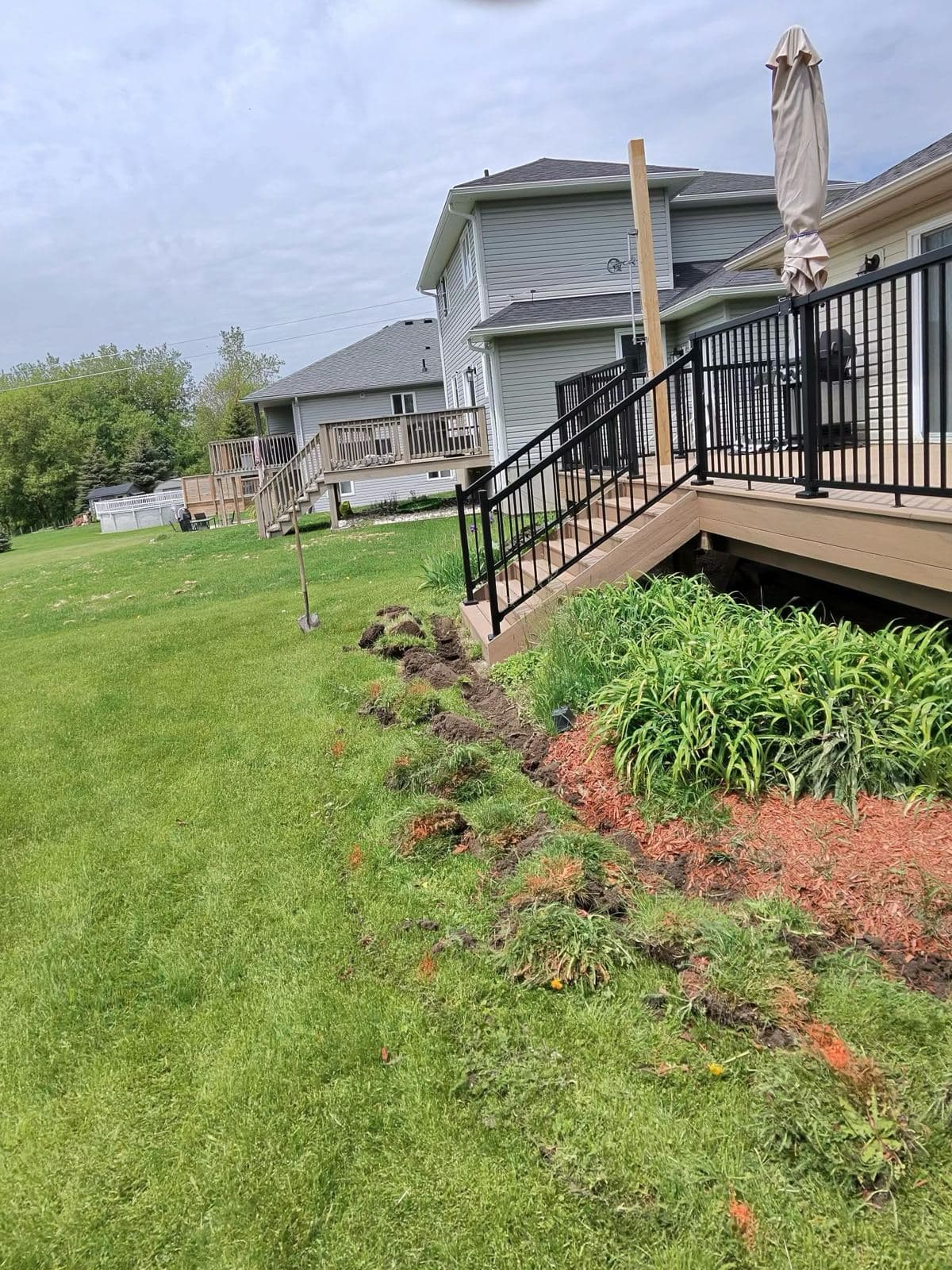
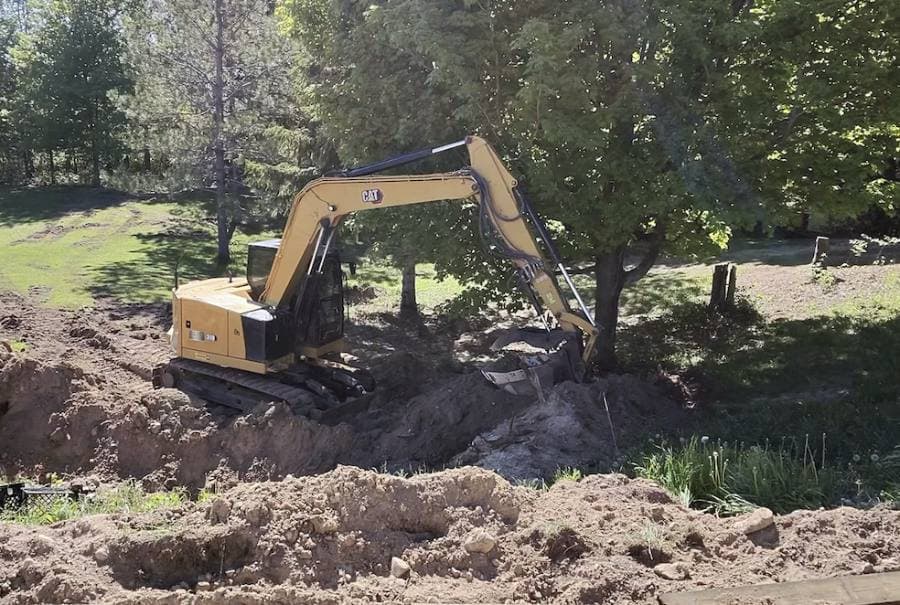
A stamped patio is a decorative finish on a structural slab, and the slab still has to sit on something. Back yards are the worst ground we work on: they are usually disturbed builder fill, they often slope toward the house, and the topsoil has to come off before anything useful starts.
We excavate, build and compact granular base in lifts the same way we would under a driveway, reinforce, and cut control joints into the pattern so the joints hide in the design instead of running across the middle of it.
We seal before we leave, which brings the colour up and protects the surface. Sealed decorative concrete needs resealing periodically to keep looking the way it did on day one, and how often depends on sun exposure, traffic and whether it gets salted in winter.
We will tell you the real interval for your patio rather than the brochure number. It is not an onerous job and you can do it yourself, but you should know it exists before you choose stamped over broom.
A number off a website is a guess, and guesses turn into surprises on the invoice. Every job is priced to what is actually in front of us. These are the things that move it:
The site visit is free. The quote comes back itemized, with the HST and the total including HST shown, inside 48 hours. What you sign is what you pay.
Stamped is one engineered slab: nothing shifts, nothing grows between the joints, and there is no re-levelling. Pavers can be lifted and replaced individually and are easier to alter later. For most back yards we pour, stamped wins on how it looks in year fifteen. There is a longer piece on this in our guides.
Foot traffic in a day or two, furniture in about a week, full cure over the first month. The sealer wants to be left alone for the first day or so.
The texture of the stamp itself gives it grip, and the sealer we use for walking surfaces is not a high gloss. If it is a pool surround, say so at the site visit and we will spec accordingly, because that is a different requirement.
Yes, and we do it regularly. Tying into an existing structure is a forming problem more than a concrete problem: the joint has to allow for the two things moving independently, which means an expansion joint rather than butting the slab hard against the structure.
Real jobs, real photos. Nothing on this page is a render.


Selling the house, or clearing one out. If your project touches either, you are already in the right place.
Buying, selling or listing in Kitchener-Waterloo. Our real estate partner for clients moving into or out of a property we are working on.
Visit→Downsizing, senior moves and full-home clear-outs across Kitchener-Waterloo. Part of the same group as Ironground.
Visit→Tell Colin what you’re building. Photos help but aren’t required. Even just the basics is enough to get started. Colin sends your quote within 24 hours.