Ironground
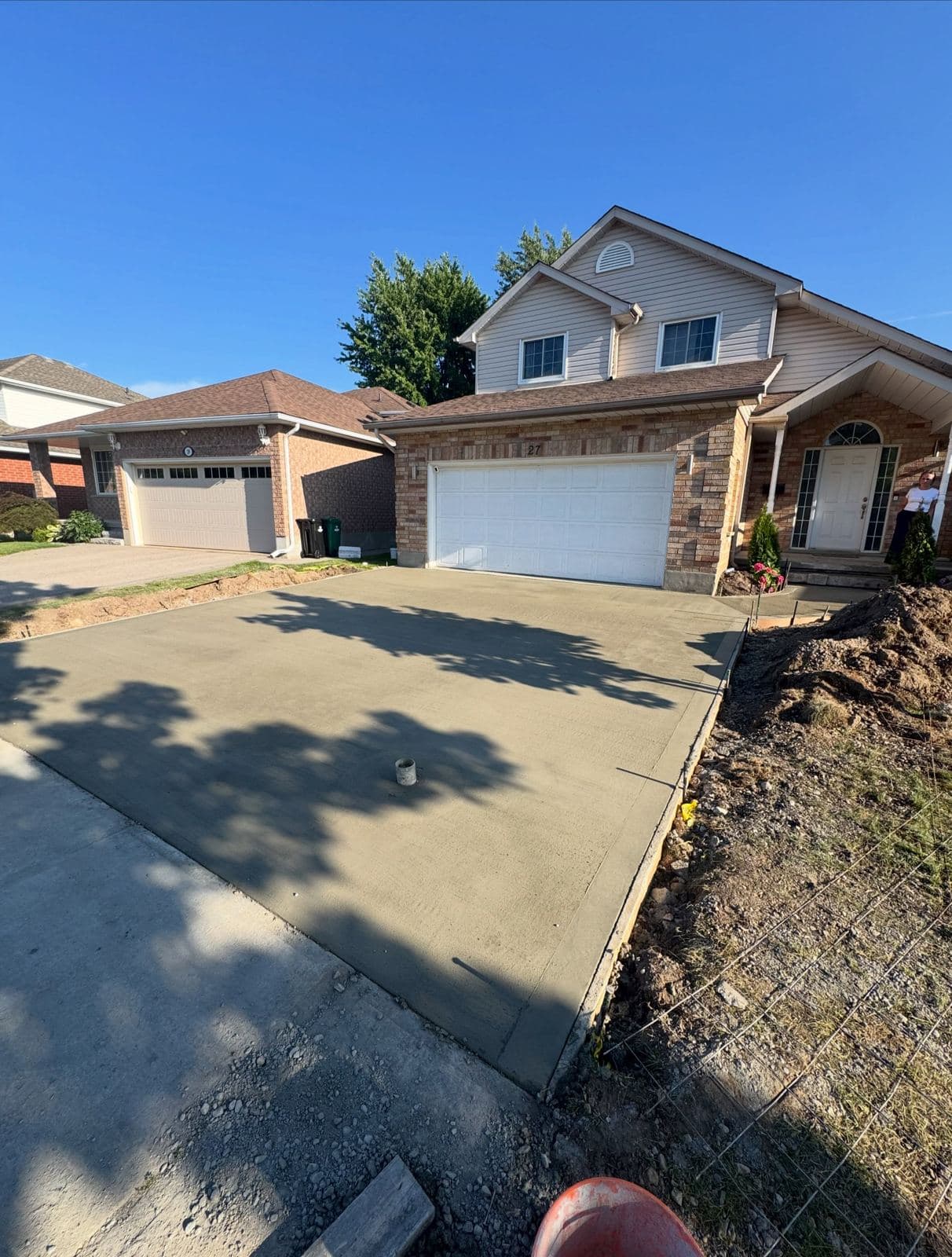
a new broom finished concrete driveway and porch in Kitchener
Residential concrete

Concrete driveways

A driveway fails from underneath. Almost everything we do happens before the truck arrives.

Homeowners judge a driveway by the surface, which is reasonable, because that is the part you can see. Concrete does not fail there. It fails because the ground under it moved, and the ground moved because the base was thin, poorly drained, or never compacted properly in the first place.

So most of the money and most of the days on a driveway job go into the part that ends up buried. That is not a sales line, it is the whole difference between a slab that is flat in twenty years and one that is stepped and cracked in five.

Tear out, rather than pour over

Pouring new concrete on top of a failed driveway is the cheapest thing a contractor can sell you and it is almost always the wrong answer. The old slab moved for a reason, that reason is still down there, and now it is under four more inches of concrete.

We take the old slab out, haul it away, and deal with what we find. Occasionally what we find is a genuinely sound base, and when that happens we say so, because we would rather do the smaller job than talk you into the bigger one.

Excavate to depth, then build the base back up in lifts

We dig past the old fill to ground that will carry load, then build granular back up in lifts and compact each lift rather than dumping the full depth and running a plate over the top of it. Compaction only travels so far down. A 300mm dump compacted from the surface is compacted for the first 100mm and loose underneath, which is exactly the condition that produces settlement two winters later.

Drainage gets designed at the same time. Water that cannot get out from under a slab freezes under it, and freezing water expands about nine percent. That is the force that lifts driveways, and no amount of good concrete resists it.

Reinforcement and joints, cut where we want it to crack

Concrete cracks. Every slab does, because concrete shrinks as it cures and it is restrained while it shrinks. The job is not to prevent cracking, it is to decide where it happens.

Control joints cut to depth and spaced to the slab give the shrinkage somewhere to go, so the crack forms in a straight sawn line instead of wandering across the middle of the driveway. Reinforcement, mesh or bar depending on the load, holds the two sides of that crack tight together so it stays a line rather than becoming a step.

Finish, and then actually seal it

Broom finish is the default for a driveway and there is nothing second rate about it: it is the most slip resistant, the easiest to clear snow off, and the least maintenance. Exposed aggregate gives you texture and hides surface wear well. Stamped gives you a pattern and integral colour and is the one that changes how the front of a house reads.

All three get sealed. Sealer is what keeps road salt out of the surface, and road salt is what causes the flaking and pitting you see on ten year old driveways around here. Decorative finishes want resealing on a cycle and we will tell you what that cycle actually is before you choose, not after.

What changes the price

We do not publish rates, and here is why.

A number off a website is a guess, and guesses turn into surprises on the invoice. Every job is priced to what is actually in front of us. These are the things that move it:

  • ·Square footage and the shape. Curves, borders and tie-ins all cost more to form than a rectangle.
  • ·What is coming out, and whether it is concrete, asphalt or interlock.
  • ·What the base turns out to be once the old surface is off.
  • ·Access. A driveway a machine can reach is a different job from one that has to be barrowed.
  • ·The finish: broom, exposed aggregate or stamped, and any decorative border.
  • ·Drainage work, and whether the apron where it meets the road has to be dealt with.

The site visit is free. The quote comes back itemized, with the HST and the total including HST shown, inside 48 hours. What you sign is what you pay.

Common questions
How long does a driveway replacement take?+

Typically four to seven days on site: demolition and haul-away, excavation, base and compaction, forming, pour, finish, then cure. You can usually walk on it in a day or two and park on it in about a week, though we will give you the actual dates for your job rather than a rule of thumb.

Concrete or asphalt?+

Asphalt is cheaper up front and needs resealing every few years, and it softens in real heat. Concrete costs more to put in and lasts substantially longer with less attention. If you are staying in the house, concrete usually wins over the life of it. If you are selling in two years, that is a different calculation and we will say so.

Will it crack?+

Yes, and so will every other concrete driveway in Ontario. Concrete shrinks as it cures and it cracks where it is restrained. The difference between a good job and a bad one is that on a good job the cracks are in the sawn joints where we put them, and the reinforcement holds them tight so they stay hairlines rather than becoming steps.

Can you widen what I have instead of replacing it?+

Often, yes, if the existing slab is sound. The joint between the old and the new is the part that decides whether it reads as one driveway or as a patch, so we saw a clean edge, dowel into the existing slab and match the finish rather than butting new against old.

Recent work

Poured this season.

Real jobs, real photos. Nothing on this page is a render.

a new broom finished concrete driveway and front porch poured by Ironground on Gregg Court, Kitchener
HomeownersIronground project
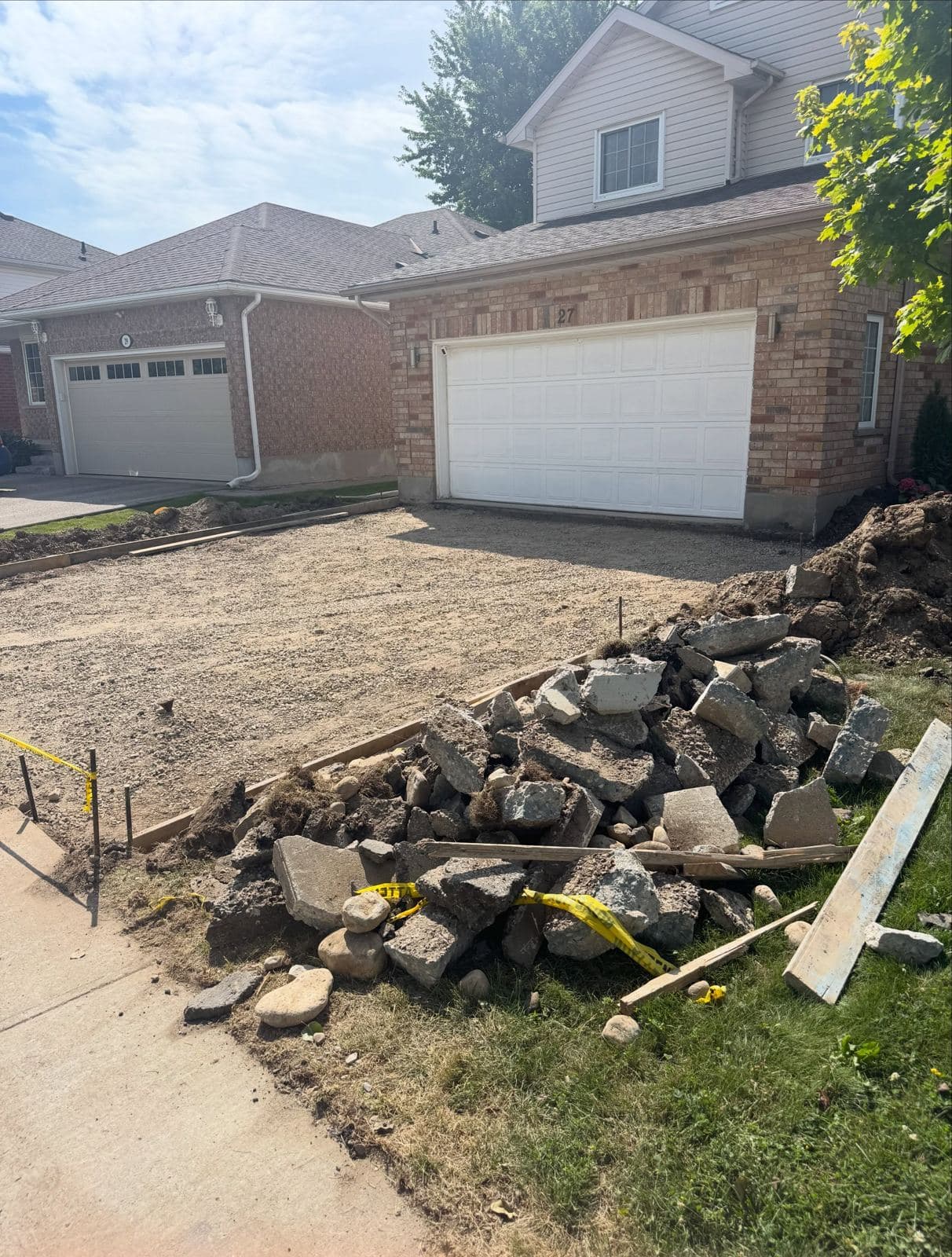
the old broken concrete torn out at Gregg Court before the new pour
Before

Gregg Court

Kitchener
Scope.
Old concrete broken out and hauled, base rebuilt, new front porch and a full width driveway.
Result.
Formed, poured and broom finished by our own crew. A complete front entrance transformation.
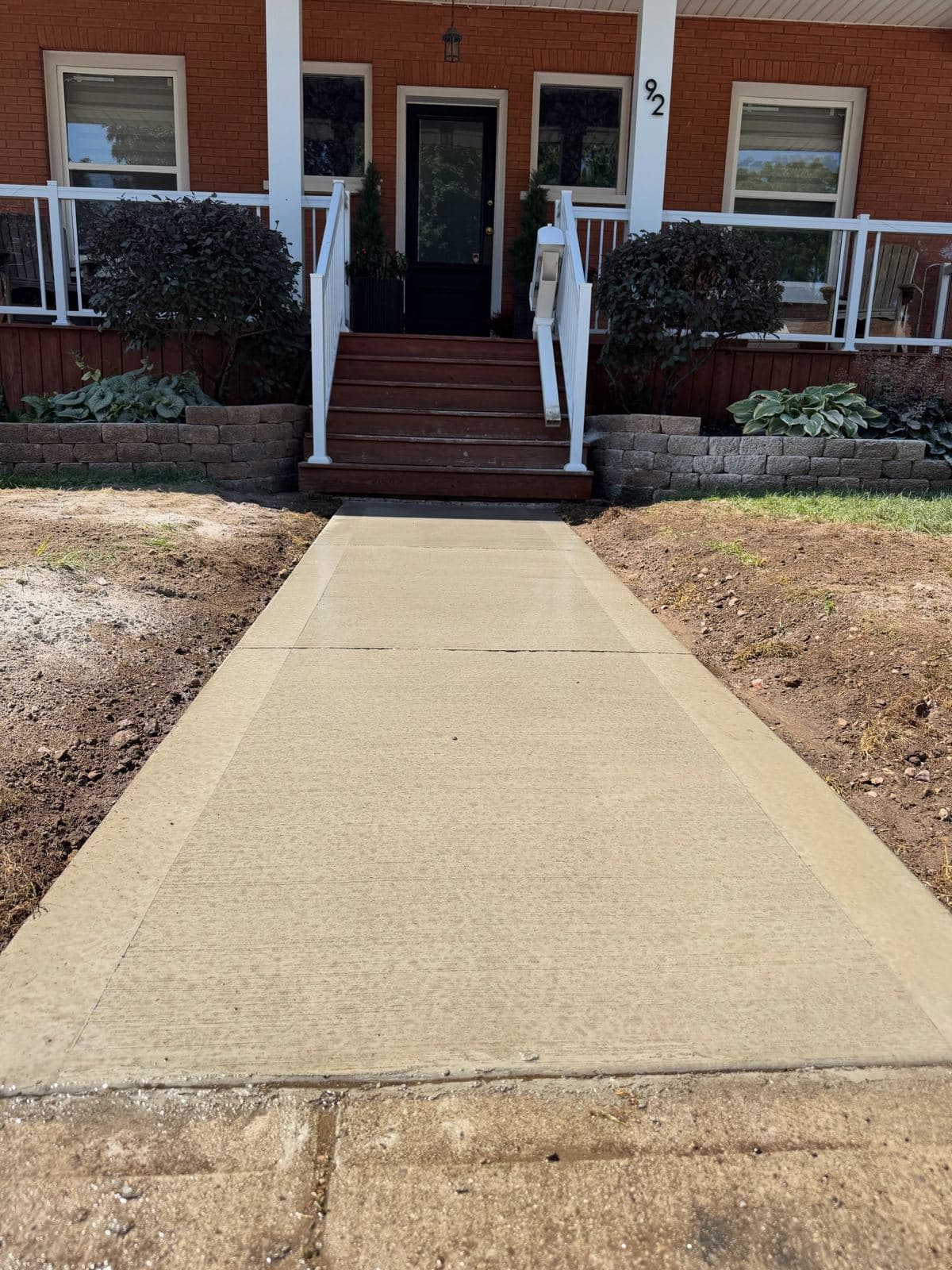
a broom finished concrete front walkway poured by Ironground on Tait Street, Cambridge
HomeownersIronground project

Tait Street

Cambridge
Scope.
Two pours at one property: a front walkway from the sidewalk to the steps, and the driveway beside it.
Result.
Straight, clean broom finish with sawn control joints, tied into the existing steps.
a stamped concrete back patio poured by Ironground at Havendale Place, Waterloo
HomeownersIronground project

Havendale Place

Waterloo
Scope.
Stamped back patio, shed pad, side walkway and front steps.
Result.
Four pieces of flatwork at one home, stamped and broom finishes matched to the property.
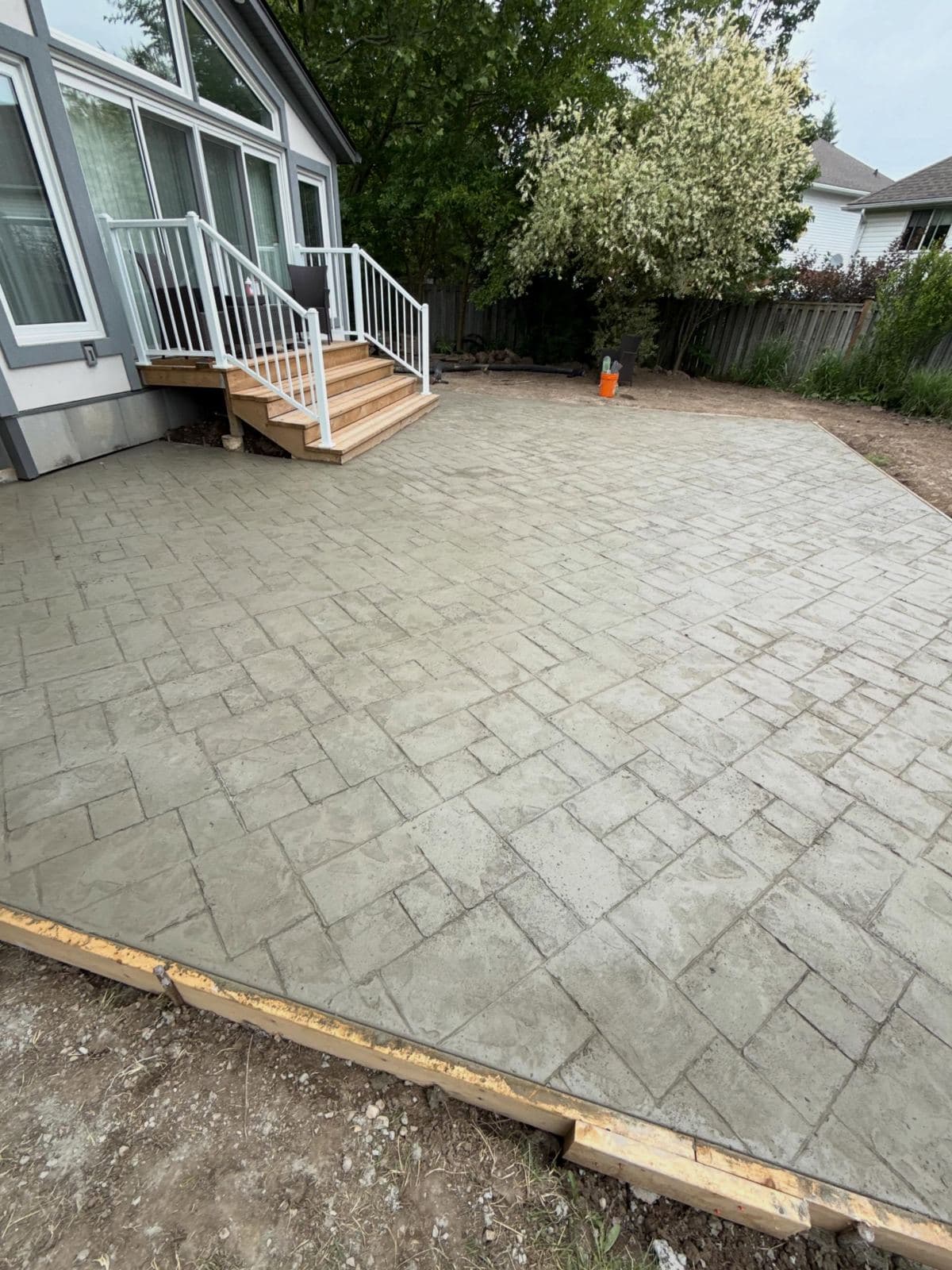
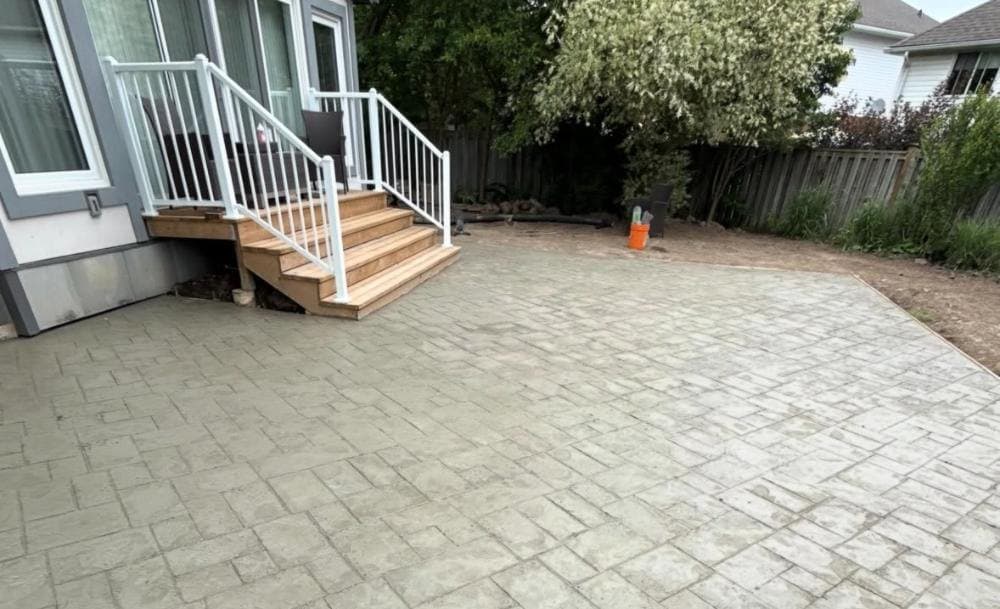
a large ashlar-pattern stamped concrete patio running off a rear deck
HomeownersIronground project

Stamped patio

Kitchener
Scope.
Formed, placed and stamped patio with integrated walkway.
Result.
Largest residential finish job of the season. Formed to the shape of the yard and sealed before we left.
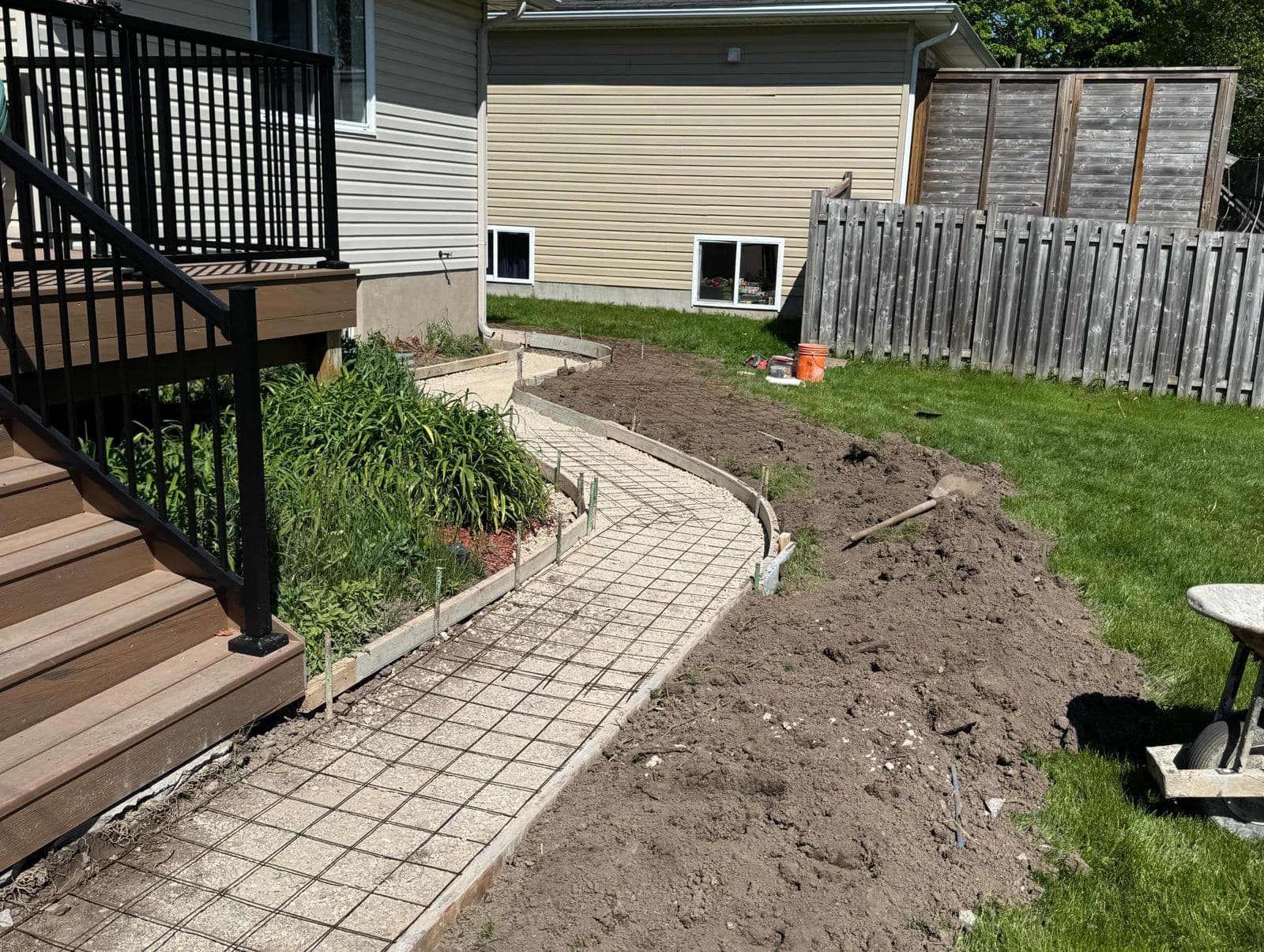
a radiused broom finished concrete walkway wrapping a house in Arthur, poured by Ironground
HomeownersIronground project
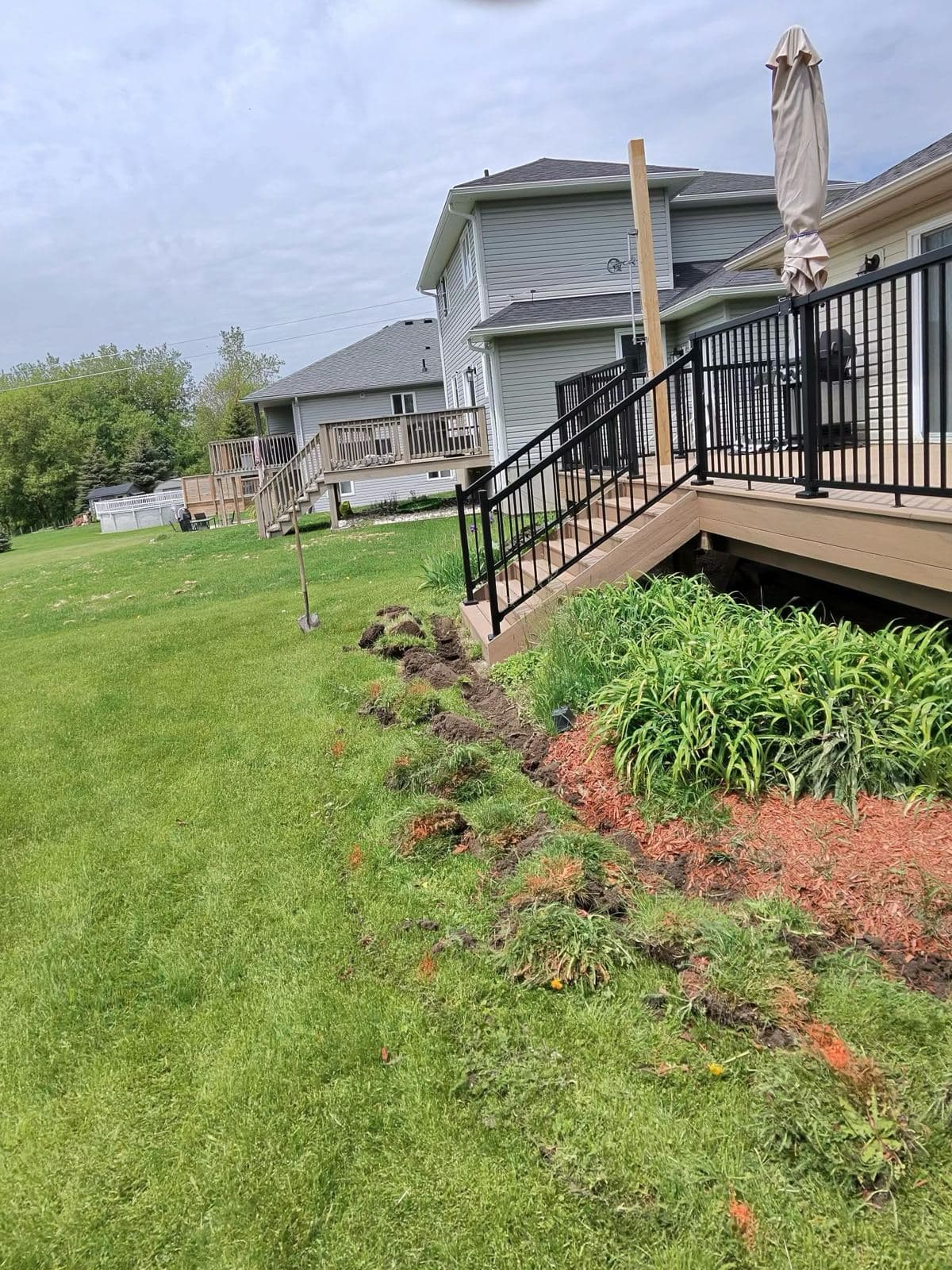
the side yard in Arthur before the walkway was poured
Before

Wraparound walkway

Arthur
Scope.
A walkway from the rear deck stairs wrapping the foundation, plus window well replacement.
Result.
Radiused around the garden bed instead of hard corners, broom finished for grip.
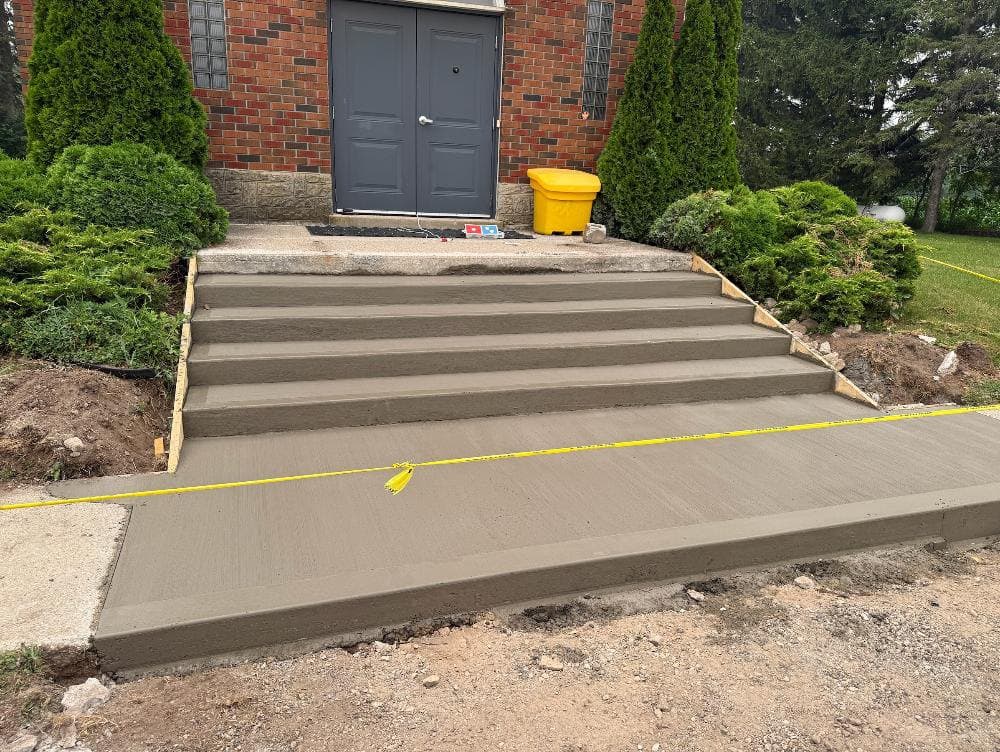
freshly finished cast-in-place concrete steps and landing at a church entrance
HomeownersIronground project
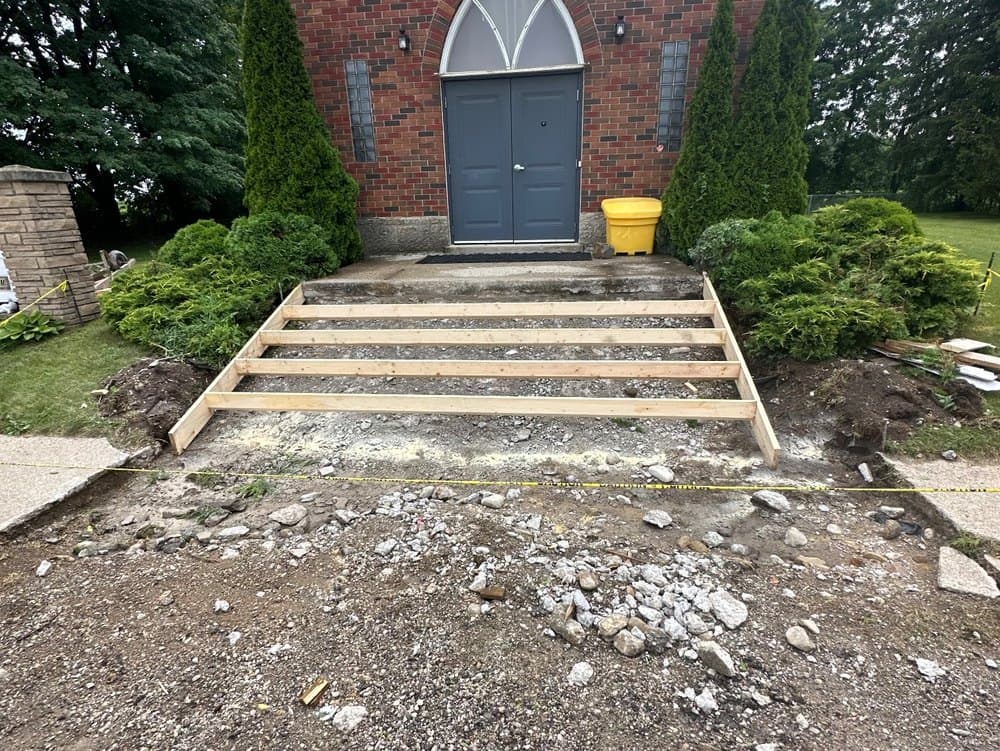
the same church entrance formed and prepped, ready to place
Before

Cast-in-place steps, Galt church

Cambridge
Scope.
Full tear out and rebuild of the front entrance steps. Formed risers and treads to code geometry, broom finish.
Result.
Institutional client, completed July 2026.
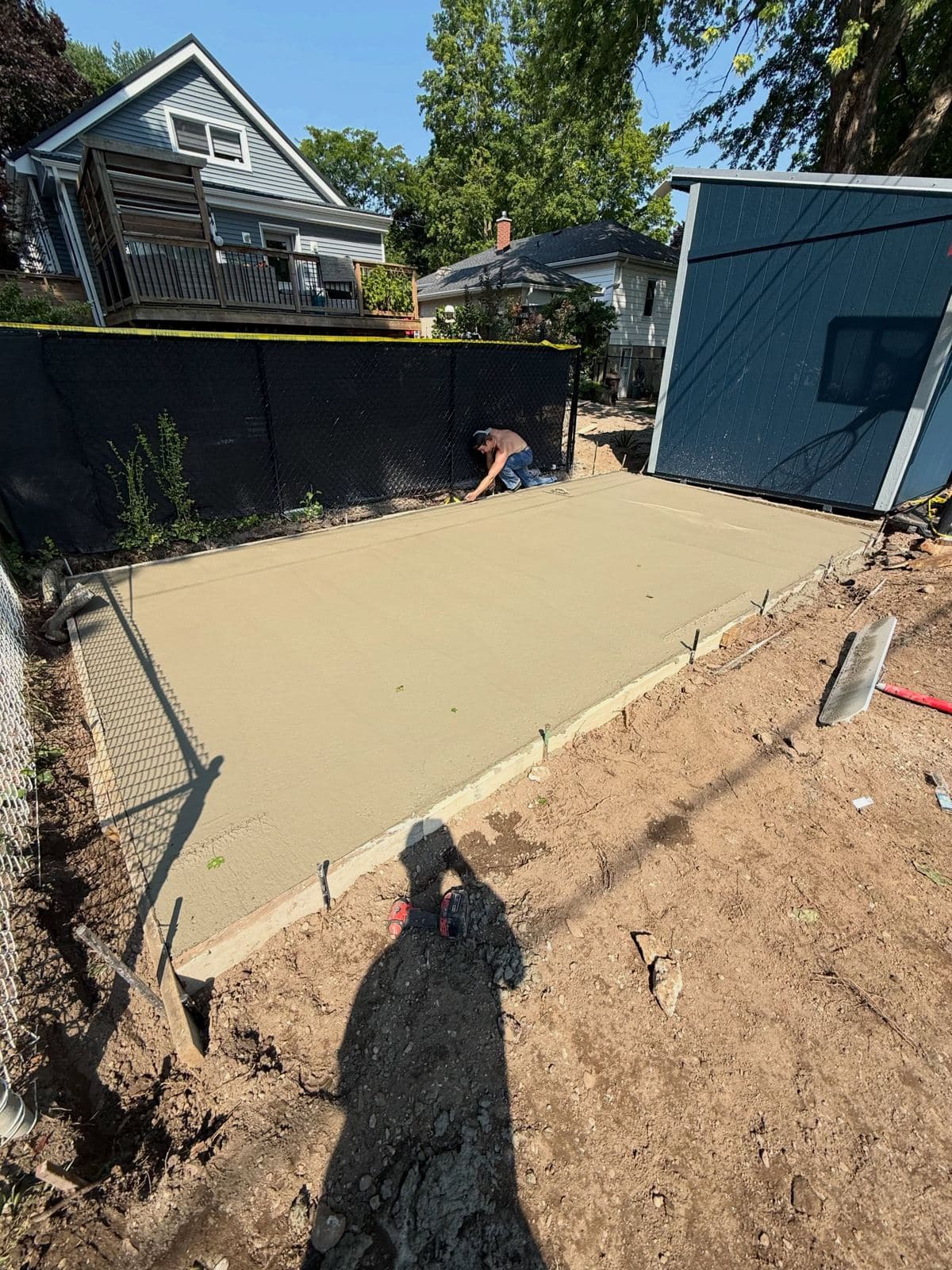
a freshly poured broom finished backyard concrete slab in Cambridge by Ironground
HomeownersIronground project

Backyard slab

Cambridge
Scope.
Site prep, forming, placement and broom finish for a complete backyard concrete installation.
Result.
A clean, durable backyard surface, formed square to the fence lines.
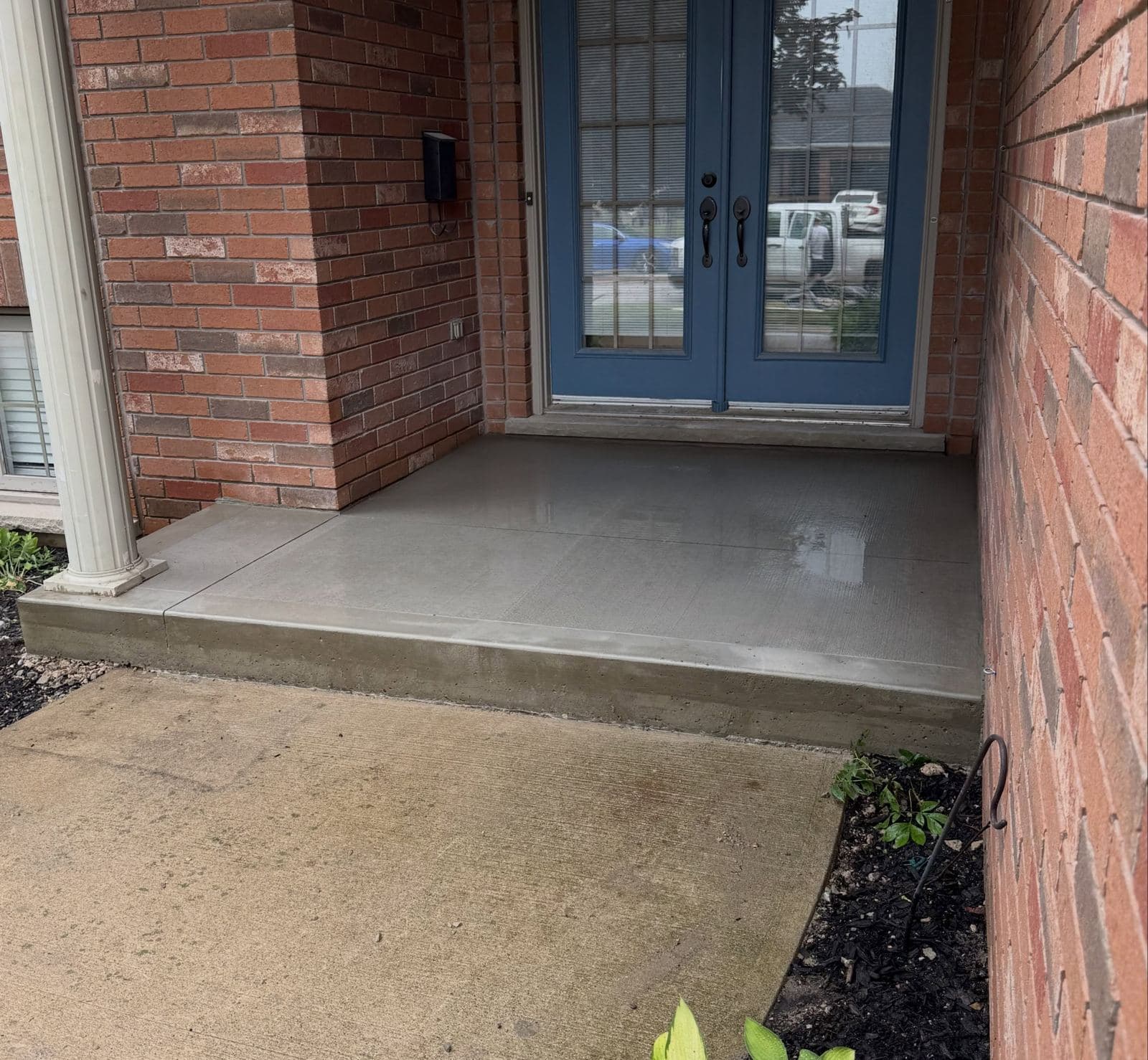
a new poured concrete front porch slab in Paris, Ontario, by Ironground
HomeownersIronground project

Front porch

Paris
Scope.
New poured concrete slab at the front entrance.
Result.
Finished for a clean look and long lasting protection.
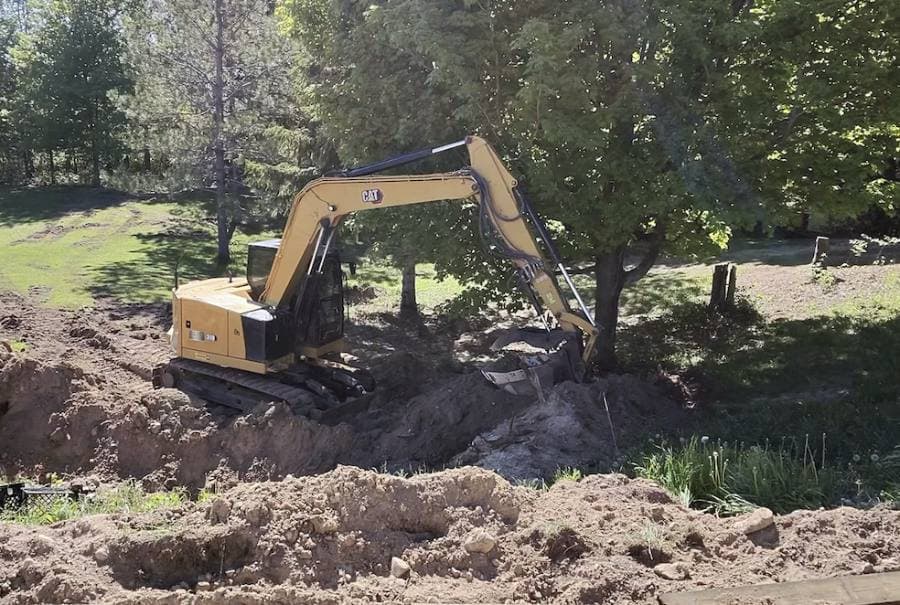
an excavator digging the footing trench for a home addition
HomeownersIronground project

Home addition foundation

Southgate
Scope.
Excavation, site prep and cast-in-place foundation for a 2,000 square foot home addition. Footings, frost walls and backfill.
Result.
Dug, formed and poured by our own crew. Framer on the deck with no rework.
Get your free quote

Submit your job

Tell Colin what you’re building. Photos help but aren’t required. Even just the basics is enough to get started. Colin sends your quote within 24 hours.

  • ✓ $10M insured
  • ✓ Owner-run, talk to Colin
  • ✓ Free quote in 24 hours
  • ✓ Kitchener-Waterloo

Phone or email, whichever’s easier. Just one is enough for Colin to reach you.

No spam. Your details are only used to quote your project.